


We are the progeny of broken gods and borrowed fire.
Progeny is a tabletop roleplaying game where ancient Greek gods have embraced the space age and divine heritage flows through mortal veins. Players take on the roles of heroes navigating a solar system where gods rule as political leaders, mythical creatures have adapted to space-age life, and every supernatural ability flows from your relationship with the divine.
This System Reference Document contains the complete rules for playing Progeny. It covers character creation, core mechanics, combat, advancement, and guidance for running the game.
Progeny uses the Midnight Sandbox system, a modular framework designed for novella campaigns that build toward satisfying conclusions rather than sprawling indefinitely.
Core Design Principles
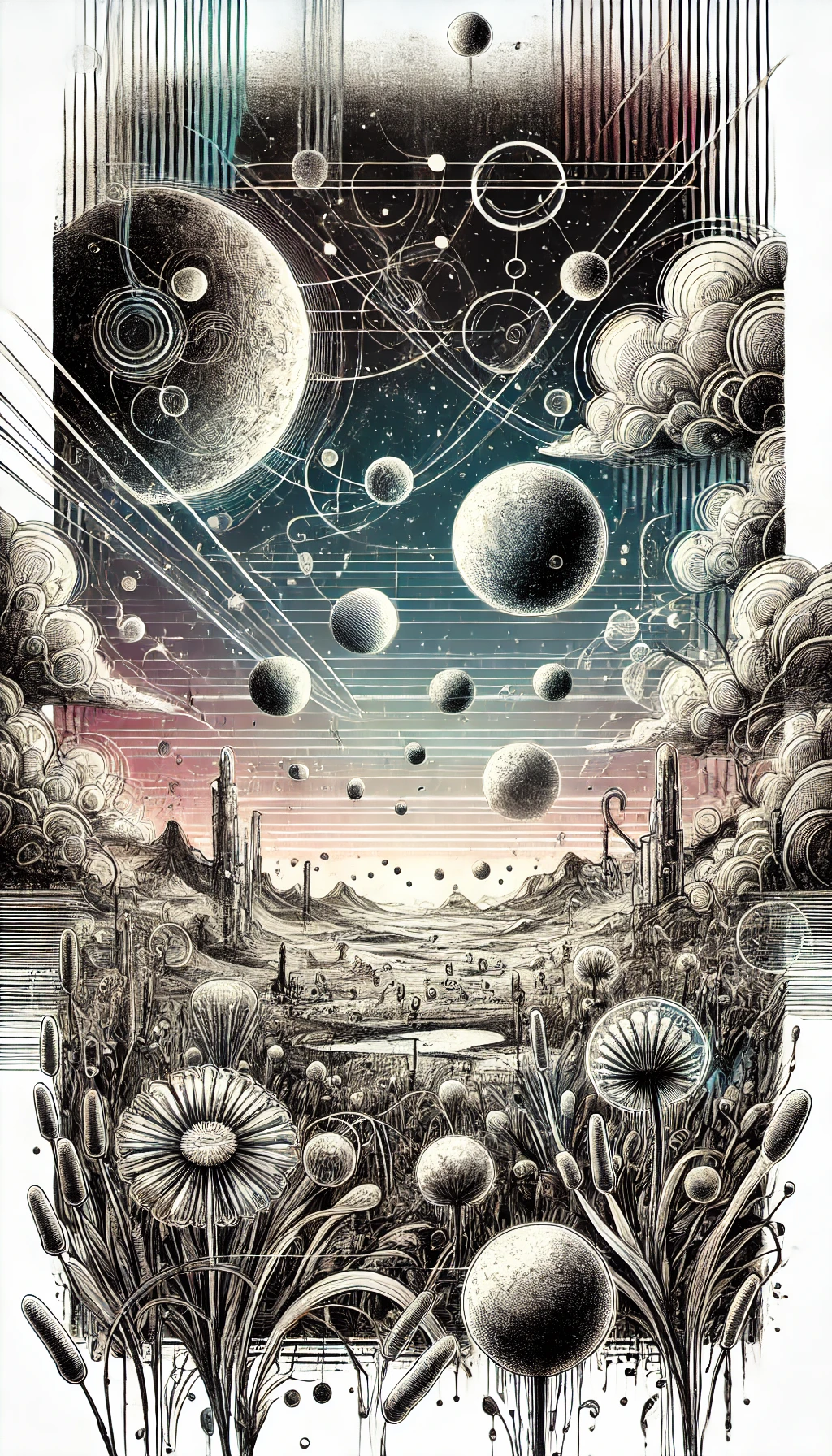
The Kosmos at a Glance
The setting spans our entire solar system, called the Kosmos, from Mercury's energy-producing mantle to frontier settlements at the Oort Cloud's edge. Humanity nearly went extinct when Earth died. The Greek gods returned, saved what remained, and helped our species spread across the stars. Almost every mortal alive today carries divine ancestry, which is where the game gets its name: Progeny.
A few things that make this universe distinct:
Gods govern as divine patrons, not kings.
Each shapes their world differently. Demeter guides Venus like a grandmother, Aphrodite curates Europa through taste, Ares runs Mars as a combat entertainment empire. No central government exists, just divine fiefdoms loosely coordinated through Olympus Nesos.
Supernatural power flows from the gods.
Boons are granted when a god reads a mortal's spiritual tapestry and finds it appealing, a well drilled into divine power rather than spells learned from books. The one exception is astral projection, which mortals can learn on their own.
Civilization runs on divine energy and compressed water.
Links, small constructs forged by Hephaestus's cadre, serve as batteries for everything from handheld tools to city infrastructure. Combined with D.E.W. (water folded so a single drop expands to fill a glass), they generate exponentially expanding steam that powers settlements, fleets, and life support across hostile worlds.
The dead become the monsters.
Mortal spirits that go wrong transform into escalating threats: fiends breach into the physical plane as mindless horrors, reavers devour other spirits in madness, and behemoths grow large enough to exist in both planes simultaneously as building-sized celestial beasts hunted by Voidkin crews in the Astral Sea.
Making It Your Own
"If anyone tells me that I have got the stories 'wrong' I believe I am justified in replying that they are, after all, fictions." (Stephen Fry, Mythos)
The gods, cultures, and cosmic history here are a foundation, not a constraint. Change what doesn't serve your table. Swap gods, invent new lineages, reimagine divine politics. The rules themselves are the same either way. Modify anything that gets in the way of the stories you want to tell. If everyone at your table agrees, it's the right call.