
"Out here, your word is your bond, your crew is your family, and the void is your fortune. Break any of those, and you'll find yourself drifting alone with nothing but regret for company." -- Captain Vosha de Black Spear, Makemake Settlement
At a Glance
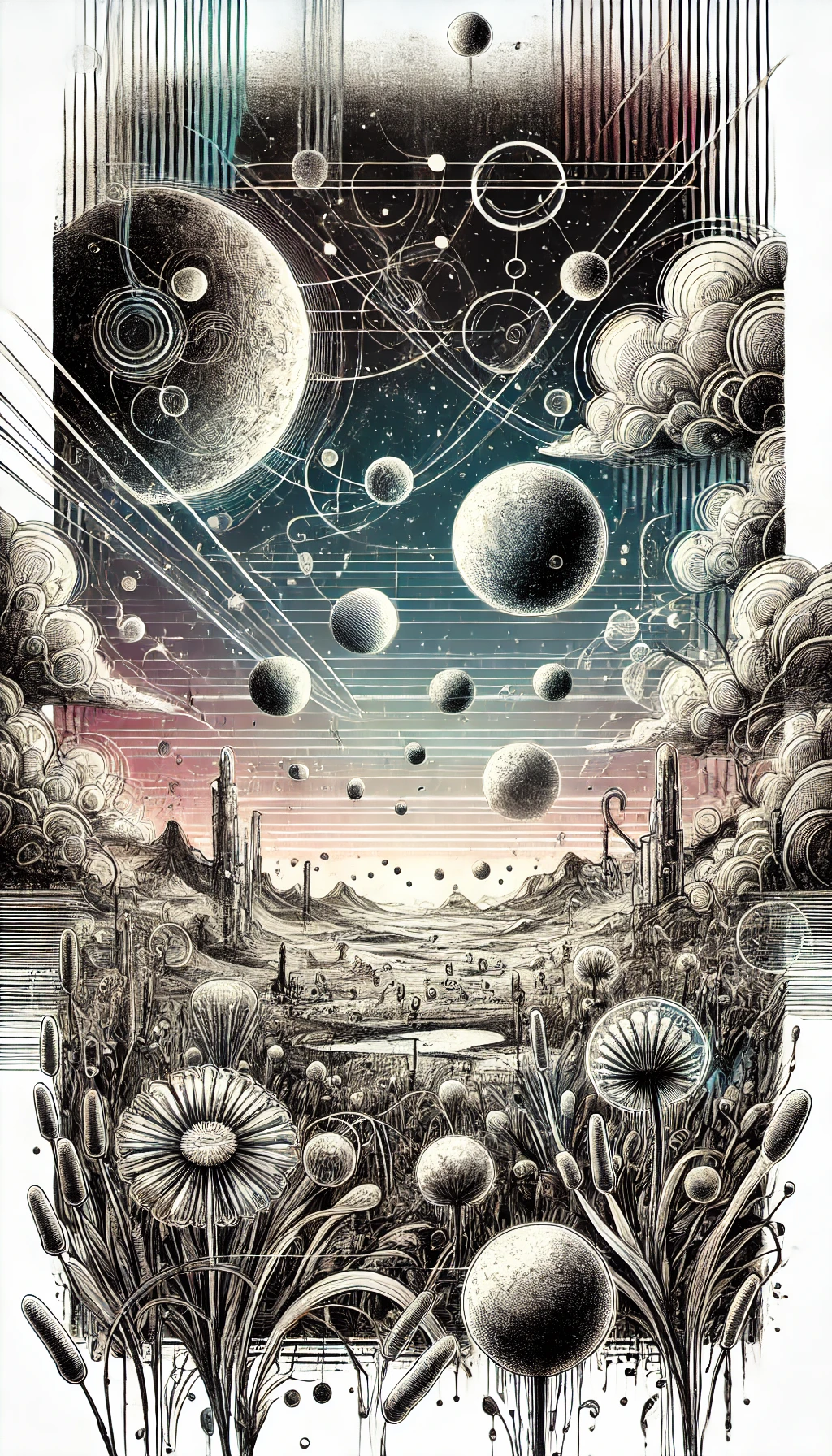
Eight pressurized settlements scattered across Kuiper Belt dwarf planets, connected by behemoth migration routes and the crews brave (or desperate) enough to sail them. Poseidon founded these ports as supply bases for his expeditions into the infinite void, then largely forgot about them while chasing whatever lies past the next horizon. The settlers he attracted, natural rebels and risk-takers who found inner-system life suffocating, built their own civilization on honor codes and behemoth harvests. The result: a loose confederation of frontier towns where your reputation is the only currency that matters and a handshake carries more weight than any written contract.
What You See
Approach any Astral Sea port and the first thing you notice is scale, or rather, the lack of it. Settlements cling to frozen dwarf planets like barnacles on driftwood: clusters of pressurized domes, underground warrens, and jury-rigged airlocks glowing faintly with Link-powered light against absolute darkness. Steam vents trail from every structure, bleeding warmth into space as Link-and-D.E.W. generators keep the air breathable.
Inside the domes, the claustrophobia inverts. The Marrow's underground corridors bustle with crews hauling cargo past walls lined with brass piping and pressure gauges. The air tastes recycled and metallic, faintly humid from condensation on cold stone. Hydroponic gardens cast green-tinted light between machine shops where engineers hammer behemoth bone into hull plating. Taverns built from salvaged metal ring with competing stories, each crew louder than the last.
The Bone Market dominates The Marrow's central cavern: skeletal remains of cosmic predators displayed alongside harvested materials, part trading post and part memorial to crews who didn't come back. Everything here carries the particular smell of enclosed frontier living: recycled air, engine grease, and the faint ozone tang of overworked Link generators.
How It Works
Poseidon established these settlements but his obsession with the deep void pulls him further from them every decade. He treats the ports as resupply bases, occasionally sharing intelligence about behemoth movements in exchange for loyalty and first pick of exotic specimens. Artemis appears when particularly dangerous quarry surfaces, hunts it, and vanishes. Day-to-day governance falls to captain councils where ship commanders make collective decisions through consensus. Think trade association, not government. Influence flows from demonstrated competence and crew loyalty, not appointment or election.
Behemoth hunting drives the economy. Crews track, engage, and harvest cosmic predators (corrupted shades massive enough to exist in both the physical and astral planes), yielding exotic biological materials impossible to source anywhere else in the Kosmos. Between hunts, settlement workshops process these materials using techniques passed through generations, combining behemoth-sourced substances with conventional materials to create hybrid products. Support roles fill the gaps: pilots navigating astral currents, engineers keeping life support functional, traders negotiating with inner-system collectors, and astral projection specialists scouting prey that phases between realities.
The Honor Accords hold everything together. Three principles: Word-Bond (spoken agreements are absolutely binding), Crew-Right (no interference in another crew's internal affairs), and Port-Peace (settlements are neutral ground, always). Violate these and affected parties can declare a Blood Hunt, authorizing any crew in the Astral Sea to pursue you until you make full restitution or die in the attempt. Crews function as chosen families, with bonds forged through shared danger that transcend individual expeditions. Leadership is earned through successful hunts, not granted through titles.
Why You'd Go There
The Astral Sea is the Kosmos's only source of behemoth-derived materials. If your patron, employer, or personal obsession requires substances harvested from creatures existing in two planes of reality simultaneously, this is where you come. Collectors throughout civilization pay premium prices for biological compositions that defy conventional understanding of matter and energy.
Beyond trade, the settlements serve as the last waypoints before true interstellar void. Crews heading into uncharted space resupply at Void's End on Sedna, where experienced captains trade hard-won wisdom about what lies past the mapped routes. Information about migration patterns, astral conditions, and hunting opportunities circulates through port taverns, making any visit an intelligence-gathering opportunity.
For parties looking for work, the frontier always needs hands. Crews recruit at every port, Blood Hunts create bounty opportunities, and captain councils occasionally hire outsiders for problems too politically sensitive for local crews to handle. The Honor Accords protect visitors and residents equally, but anyone who breaks their word here will discover that frontier justice moves faster than the Arbitration system.
Notable Locations
The Marrow (Pluto, pop. 65,000). The unofficial capital, sitting where three major behemoth migration routes intersect. Its underground warrens house the largest markets in the Astral Sea, and the Bone Market serves as the confederation's premier trading post for harvested materials. If you need a crew, a contract, or a rumor, start here.
Blackwater Rock (Gonggong, pop. 55,000). The Astral Sea's rendering yards, where behemoth carcasses are broken down into materials the inner system will actually buy. Silenarch-run processing lines operate around the clock, dismantling harvested biological matter with mechanical precision while Voidkin overseers manage the supply chain from kill site to cargo pod. The settlement's name comes from underground reservoirs where D.E.W. runoff mingles with behemoth biological waste during processing, producing a dark, faintly luminescent slurry that is both the port's greatest hazard and a source of unique chemical compounds found nowhere else in the Kosmos.
Loosemoor (Eris, pop. 52,000). Built on a rock that never sits still. Eris's wildly eccentric orbit carries the settlement from the inner Kuiper Belt to deeper than Void's End over a roughly 500-year cycle, and every phase brings a different economy: trading post, forward hunting base, salvage hub, or staging ground for the next shift. Population churns constantly as crews arrive for one opportunity and leave when it passes, but the families who've ridden multiple cycles are the Astral Sea's great adapters, reinventing themselves by generation. Every five centuries, the deep swing triggers a decades-long hunting frenzy that mints new legends and new fortunes.
Splitshare (Makemake, pop. 48,000). The cooperative ideal made functional. Crew-owned facilities, shared resource pools, and a Commons Hall that serves as both meeting space and cultural archive. Storytelling sessions here preserve oral histories of legendary hunts and cautionary tales about underestimating what you're chasing.
The Mend (Quaoar, pop. 42,000). The Astral Sea's closest thing to shore leave. After soul sailing reconnected the frontier, an ambitious Voidkin crew returned from the Bacchanal Fleet convinced they could recreate the experience on Quaoar. The pleasure venture failed within a decade, but the heated D.E.W. pools, private quarters, and imported medicinal fungi outlived it. Frontier medics and a handful of stranded revelers repurposed the infrastructure into a recovery port where crews patch up between hunting seasons, treating everything from decompression injuries to behemoth-toxin exposure in facilities that still feel oddly luxurious for this far out.
Keellamp (Haumea, pop. 35,000). The frontier's only reliable navigational reference. Early settlers exploited Haumea's freakish four-hour rotation by mounting a massive Link-powered light array on the surface, turning the entire dwarf planet into a pulse beacon visible across vast stretches of the Kuiper Belt. The settlement grew around maintaining that beacon and evolved into the confederation's communications relay, where crews check in, report positions, and coordinate hunting operations. When Keellamp goes dark for maintenance, captains across the Astral Sea get nervous.
Stillyard (Orcus, pop. 20,000). Where ships go to die and get reborn as someone else's ship. Wrecked and abandoned vessels from failed hunts accumulate in Orcus's low gravity, and the settlement exists to strip them. Hull plating, pressure seals, Link chambers, anything salvageable gets cataloged and sold. The locals maintain a Wall of Names for every crew whose ship they've broken down, part memorial and part inventory record.
Void's End (Sedna, pop. 16,000). The last resupply point before true void. Population skews toward veterans and their hand-picked crews. The Final Port Tavern has earned its legend as the place where the most dangerous expeditions are planned by people who actually survived the last one.
Complications
Poseidon's visits grow less frequent every decade. The settlements were built for a patron who provided occasional protection and intelligence about behemoth movements; without him, crews face increasingly dangerous hunts with less warning and fewer divine safety nets. Artemis fills some of that gap, but she hunts for her own satisfaction, not theirs.
The Blood Hunt system works because everyone fears it, but it also means disputes escalate fast. A misunderstood handshake or a cargo delivery that falls short, and suddenly half the frontier is authorized to hunt you down. Loosemoor's growing reputation as a haven for crews dodging accountability tests the limits of the Accords. And deep-void crews report encounters with behemoths that don't match any known migration pattern: entities drifting inward from beyond the solar system, stranger and more dangerous than anything the Oortlings have cataloged.
Lineage Notes
Voidkin dominate, their space-adapted physiology and genetic fearlessness making them natural crew leaders and settlement founders. Silenarchs fill essential technical roles keeping life support and D.E.W. systems running where equipment failure kills. Gigantes contribute muscle for dangerous hunts and heavy construction, their warrior culture adapting well to honor-based crew hierarchies. Eclipsed are less common here than on Luna but earn outsized reputations as astral projection specialists whose dual-reality perception provides unmatched advantages for tracking behemoths between planes. Prometheans and Bloomborn are rare; the frontier's harsh conditions discourage those without void-survival physiology. The settlements judge worth by contribution and reliability, not lineage.