
"Mind the ash before it minds you, and hush your steps; the shades still echo." -- Sister Theria, Keeper of Ancient Ways
At a Glance
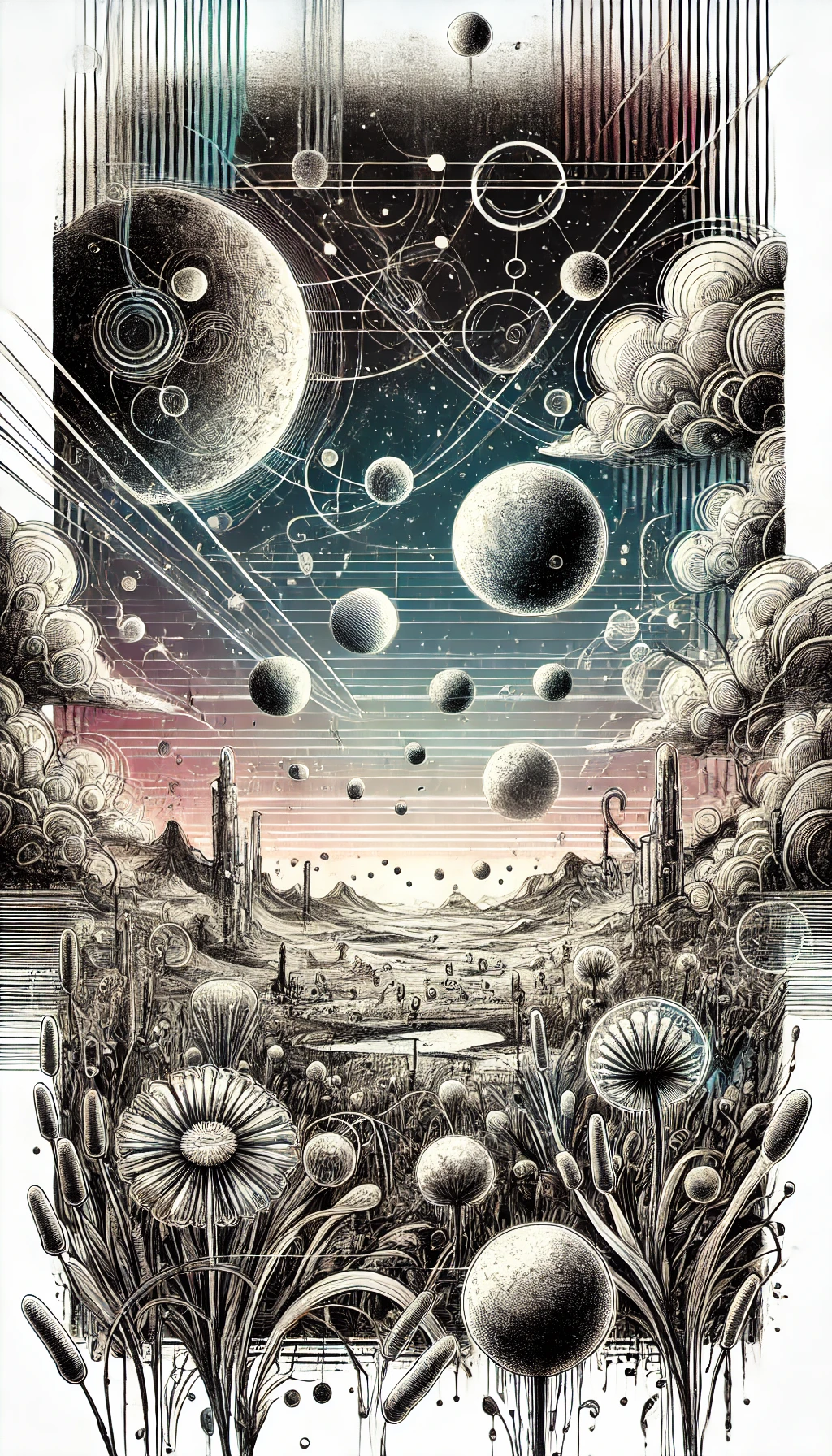
Humanity's original homeworld, now a toxic wasteland where 175,000 of the Kosmos's most stubborn optimists attempt the impossible: resurrecting a dead planet. Persephone directs the effort with serene, absolute conviction, celebrating improvements of roughly 0.1% per generation as vindication. Seven fortress-settlements cling to temperate polar refuges that formed when the axis shifted during humanity's near-extinction. The astral plane seethes with millions of maddened shades from the original die-off, making soul sailing suicidal and isolating Gaia from conventional transit networks. Getting here is hard. Staying is harder.
What You See
The air hits first: processed, recycled, carrying a faint chemical tang from Link-powered atmospheric processors working overtime to keep you breathing. Beyond the settlement barriers, Gaia is hostile beauty. Acid-scarred continents stretch toward a horizon stained the wrong shade of orange, interrupted by crystallized formations where cities once stood. Salt storms roll across dead flatlands with enough force to scour exposed metal.
Inside the fortress walls, everything serves double duty. Agricultural compounds cluster around protected seedbeds where soil specialists tend experimental crops with the focus of surgeons. Steam vents hiss from D.E.W. processing stations. Brass-fitted irrigation rigs snake between reinforced greenhouses. Link-powered lighting cycles on schedules synchronized to ancient Earth rhythms that Persephone insists remain cosmically significant.
Patches of green appear in protected areas, the kind of green that makes hardened settlers stop and stare. Each shoot represents generations of labor. The sound is mostly wind against barriers, punctuated by equipment cycling and the murmur of workers who have learned to move quietly near sacred growing zones.
How It Works
Persephone governs with the certainty of a gardener who knows exactly what needs pruning. She provides visions during meditation, whispers guidance through dying soil, and occasionally manifests during critical planting ceremonies, though her appearances carry the entitled certainty of a queen who knows everyone else is failing to keep up. Every restoration milestone is personal vindication; every setback, cosmic injustice. Mortal governance operates through the Council of Seven, where fortress-settlement representatives debate resource allocation, interpret environmental signs, and conduct religious ceremonies reinforcing shared purpose. Consensus and divine guidance outweigh majority rule.
Society functions as a religious commune dedicated to planetary resurrection. Status flows to those demonstrating greatest faith alongside hardiest survival skills. Scientists analyze soil composition and weather patterns, treating data as divine revelation. Explorers venture beyond walls to recover genetic material and pre-Collapse artifacts, risking encounters with maddened shades and acid storms. Farmers coax experimental crops from soil that still remembers death. Everyone subsists primarily on hardy grains and root vegetables (bland, nutritious, considered a triumph over impossible odds). During shortages, communities reluctantly accept fungal shipments from Venus, though this dependency creates theological tension about self-sufficiency.
Centuries of isolation have created a culture of garbled wisdom and ritual confusion. Workers mutter "ctrl-alt-pray" when equipment fails, treating forgotten technical phrases as sacred incantations. Failed experiments send teams "back to calling Thor," though nobody remembers who Thor was. Weekly Serverday Mass honors ancient "digital spirits" through readings from pre-Collapse restaurant menus elevated to scripture. The culture values "haste not, haunt not," believing rushed work invites spiritual contamination. Outsiders receive the warm hospitality typically reserved for potential grave robbers.
Why You'd Go There
Gaia holds what nowhere else can offer: pre-Collapse artifacts, unrecovered technology, and the Kosmos's most significant library at Queenstown Memorial. Heritage Station mounts expeditions across the European mainland to recover technological and cultural remnants. For parties willing to brave the wasteland, ancient genetic material and lost knowledge lie scattered across acid-scarred continents, guarded only by environmental hazards and the restless dead.
The astral chaos creates unique opportunities for the reckless. Ancient artifacts remain scattered throughout the astral realm, and the boundary between worlds has grown dangerously thin near Threshold Watch, where shade breaches into the physical plane are more frequent than anywhere else in the Kosmos. Theories abound for why, but no one has found the real explanation. Anyone with combat skills or astral experience will find steady, dangerous work defending the living from the dead. Metem occasionally assists with managing the overflow of souls, but his delicate touch proves insufficient for the sheer volume of maddened shades.
Getting here requires traditional atmospheric entry, since soul sailing is effectively impossible. This isolation means anyone who arrives has either serious purpose or serious problems. Non-Gaians face decades of hard labor before earning grudging acceptance, and romantic involvement with outsiders earns labels like "Void lover" or the near-curse "Deserter."
Notable Locations
Reykjavik Central -- Planetary capital and aquatic resurrection center (population 40,000). Brother Magnus the Deep-Fisher oversees fish nurseries in geothermal pools, breeding programs attempting to restore oceanic life. Seat of the Council of Seven.
Green Paradise -- Madagascar's agricultural heart (population 35,000). Mother Superior Anja leads the planet's most successful experimental crop programs, making this the devotional center of agricultural resurrection. What grows here feeds conviction across all seven settlements.
Threshold Watch -- Antarctica's grim frontier (population 32,000). Templar-Commander Frost defends the boundary between the mortal and astral planes, where specialized units hunt rogue spirits and maintain order among millions of waiting shades. The most dangerous posting on Gaia.
Queenstown Memorial -- New Zealand's archive (population 12,000). Sister Theria maintains the planet's largest collection of pre-Collapse artifacts and the Kosmos's most significant library. Researchers travel across the solar system for access to these records.
New Tokyo Station -- Japan's engineering hub (population 22,000). Engineer-Priest Sakura repurposes pre-Collapse industrial equipment for renewal, fusing technological innovation with religious devotion. If Gaian tech-priests built it, the design likely originated here.
Avalon Base -- Newfoundland's exploration outpost (population 18,000). Captain Erikson the Far-Walker coordinates expeditions across the poisoned American continents, recovering genetic material and charting environmental changes. Teams combine survival skills with scientific observation, mapping Gaia's recovery through systematic exploration of the wasteland.
Heritage Station -- Ireland's memory vault (population 16,000). Archivist-General Brigid leads artifact recovery expeditions across the European mainland, preserving technological and cultural remnants from the old world. These memory keepers ensure useful knowledge survives while holy wisdom guides its application.
Complications
The astral plane is a nightmare. Millions of maddened shades make astral projection suicidal and soul sailing impossible, cutting Gaia off from the Kosmos's transit networks. Fiends occasionally breach into the physical plane near Threshold Watch, and the boundary between worlds grows thinner with each generation. Acid storms can devastate months of agricultural progress in hours. Resource scarcity forces dependence on Venus for food shipments, creating theological conflict in a culture that preaches self-sufficiency. The rigid religious hierarchy punishes individualism; serious crimes against collective welfare can result in exile or execution. Buried beneath the devotion runs a tension nobody acknowledges: three millennia of glacial improvement means most Gaians will live and die without seeing meaningful change, yet questioning the mission is heresy.
Lineage Notes
Prometheans form the overwhelming majority, viewed as spiritually pure vessels for Gaia's resurrection. Eclipsed find acceptance for their sensitivity to Gaia's scattered soul fragments (created when Athena's Catastrophe shattered the planet's spirit), though their astral behavior unsettles the orthodox. Theogens contribute extended lifespans to multi-generational projects but face suspicion about divided loyalties. Silenarchs provide crucial resource optimization yet endure constant theological scrutiny, with many Gaians viewing their mechanical bodies as violations of natural order. Bloomborn trigger mixed reactions: respect for their plant-metal fusion alongside suspicion of non-Gaian origins. Gigantes, Flickers, and Voidkin rarely settle permanently, finding the rigid religious structure incompatible with their natures.