
"Through sacrifice comes enlightenment, through service comes glory, through unwavering devotion comes the restoration of divine order that shall illuminate the Kosmos once more." -- His Blessed Eminence Cardinal of Eastbrook Zev'nar, Seventh Ascendant to the Exterior Chamber, Third Primarch of the Eighteenth Primarchy, Honorary Ambassador to the House of Wool
At a Glance
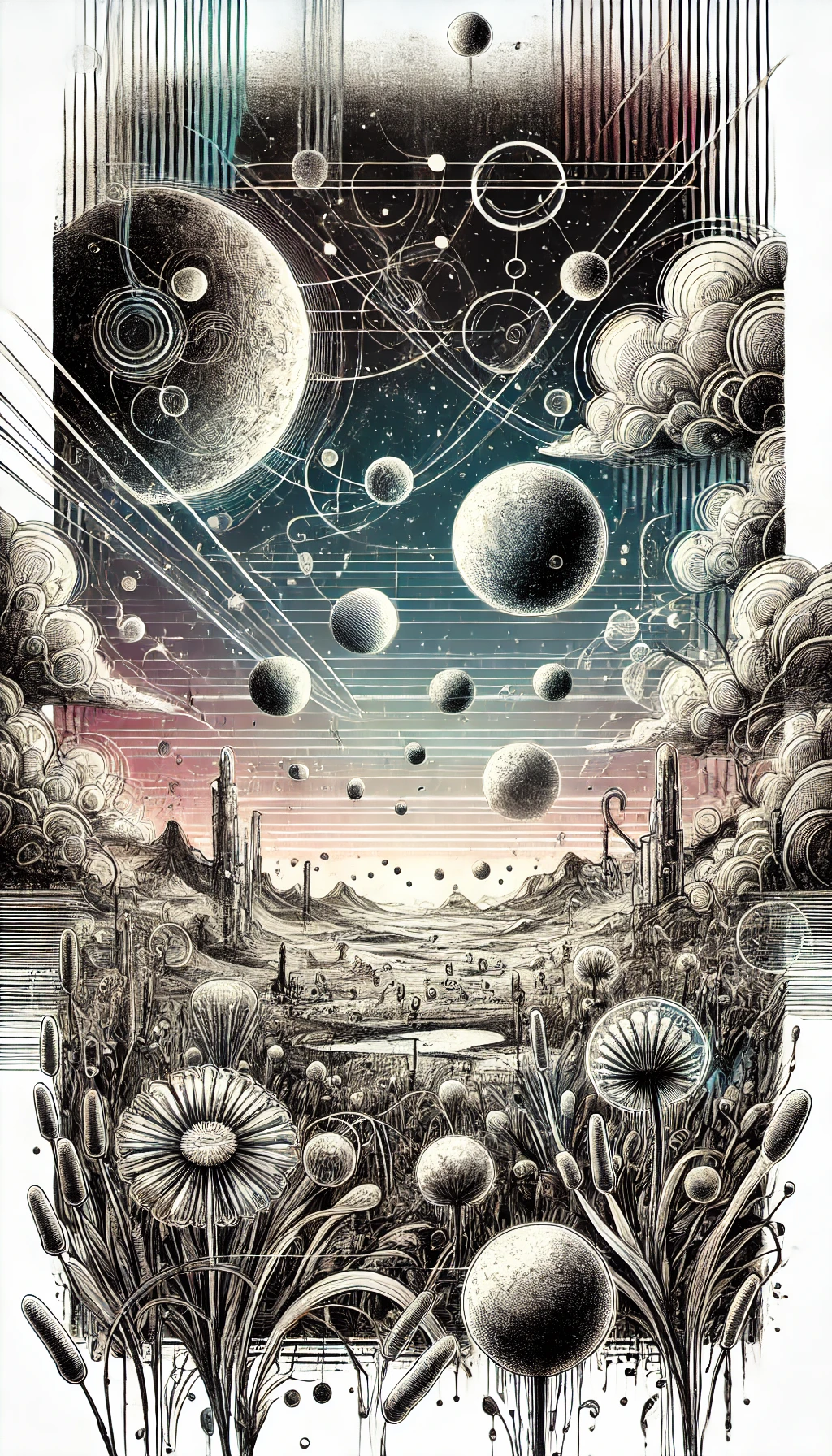
The crystalline husk of what used to be Jupiter, hollowed into underground cathedral cities by 950,000 faithful who worship the god responsible for destroying the planet in the first place. Jove rules through perpetually shifting doctrine, Byzantine titles nobody fully understands, and the sincere belief that sufficient devotion will restore him to the Olympian throne. The cities are genuinely beautiful. The living conditions are genuinely terrible. The faithful consider this arrangement proof of spiritual commitment, not a design flaw.
What You See
The cold registers first. Hyalos's underground cities maintain breathable air through mechanical atmospheric systems, but warmth is a rationed luxury. Residents move through carved silicate corridors wrapped in heavy cloaks that serve double duty as theological garments, breath occasionally visible in the chill. The steady hum of life support machinery provides a constant mechanical hymn beneath everything.
Then the light hits. The silicate substrate refracts even modest illumination into prismatic displays that shift throughout the day cycle, painting carved cathedral chambers in slow-moving color. Every tunnel, every communal hall, every worship space glitters like the inside of a geode. The effect is genuinely stunning, the kind of beauty that makes visitors forget they're cold and hungry until their stomachs remind them.
The air carries a persistent metallic tang mixed with something like burnt rubber from the atmospheric processors. Construction noise echoes constantly: the rhythmic tinking of chisels and grinding of stone as work crews carve new temple spaces or renovate existing ones to match Jove's latest architectural preferences. Conversations happen in hushed, reverent tones. The whole place sounds, smells, and feels like an active construction site inside a church.
How It Works
Jove governs as absolute monarch through a network of divine children he's named after major theological figures from humanity's spiritual traditions: Muhammad, Thor, Brahma, Shiva, Eve, Amaterasu, among others. These celestial lieutenants manage districts, oversee supply chains, and deliver divine pronouncements while their father focuses on doctrinal innovation and architectural revision. Local hierarchies of dignitaries, cardinals, and mayors stack beneath them, creating layers of administration so dense that organizational charts would require genealogical notation.
The title system defies comprehension by design. Demonstrated piety earns increasingly ornate ceremonial designations that accumulate until introducing yourself becomes a multi-sentence recitation. Whether a new title represents promotion or elaborate demotion remains deliberately unclear, ensuring advancement depends entirely on Jove's personal favor rather than any legible merit system.
Daily life revolves around rotating work assignments: temple construction serving Jove's evolving architectural vision, atmospheric system maintenance, agricultural operations in carved growing chambers, and elaborate ceremonial duties. All labor is treated as worship. The religious calendar dominates social rhythm through festivals, weekly ceremonies, and spontaneous celebrations Jove declares when his mood demands immediate adoration.
The economy runs on dependency. Food arrives from Venus as bland fungal blocks. D.E.W. routes through Luna's redistribution network, funded through an arrangement where Hyalith missionaries provide cleaning and maintenance services to Dionysus's orbiting Revel in exchange for Dionysus bankrolling their water supply. Additional necessities come through labor exchanges where Jove lends workers to other worlds. These missionary assignments create opportunities for smuggling that feeds a thriving black market in off-world trinkets and contraband.
Society splits between two philosophical camps. Preservationists believe current Hyalith life represents true spiritual existence and should be maintained exactly as Jove established it. Restorationists interpret his doctrines experimentally, convinced that sufficient work and prayer will reveal the secret to restoring his Olympian throne. Both camps share the habit of debating hidden meanings in pronouncements that contain none.
Why You'd Go There
Hyalos occupies a unique position as both religious destination and labor exchange hub. Pilgrims arrive seeking spiritual purpose in Jove's structured devotional life. Merchants and traders interact with black market networks fed by missionary smuggling operations. Couriers serving The Revel pass through regularly, since Dionysus's vessels orbit Hyalos itself.
The relationship with The Revel creates a steady flow of people and goods between Jove's austere underground cities and the floating party above them, a contrast that generates friction, opportunity, and the occasional crisis. Abandoned children from the revelers are accepted into Hyalith society, and the cultural whiplash of that transition creates stories worth investigating.
For adventurers, Hyalos offers problems outsiders can solve without offending Jove directly: Elektron infestations in cathedral spaces requiring specialized extermination, supply chain disruptions threatening atmospheric systems, smuggling operations that cross the line from tolerated to dangerous, and the perpetual need for skilled labor on construction projects. The Byzantine politics also mean factions constantly seek outside allies who aren't entangled in local hierarchies. Just be prepared for the cold, the hunger, and the very real possibility that someone will try to convert you before you leave.
Notable Locations
New Dodona. The largest settlement and Hyalos's administrative heart. Jove holds court here, delivering sermons in chambers specifically designed (and redesigned, and redesigned again) to optimize acoustics for his speeches. The seat of power for the most elaborate title ceremonies and the starting point for most visitors navigating Hyalith bureaucracy.
Sacred Aegis. A military and missionary staging ground where residents organize labor exchanges, Revel maintenance rotations, and expeditions to other worlds. The closest thing Hyalos has to a commercial district, since returning missionaries bring back goods (some officially sanctioned, many not) that flow into the settlement's black market networks.
The Bounty Fields. Sprawling facilities on Hyalos's airless surface where imported food and D.E.W. supplies are carefully stockpiled before distribution underground. Managed directly by Jove's children, these yards represent the settlement's lifeline and its greatest vulnerability. Access is tightly controlled, making the yards a focal point for political maneuvering and occasional sabotage.
Temple of Eternal Glory. The smallest major settlement but home to the most spectacular prismatic cathedral chambers on Hyalos. The silicate here produces light displays of unusual intensity, making it the preferred site for major festival celebrations, including the willing sacrifice ceremonies that outsiders find deeply unsettling.
The Cradle of Mercy. A natural cavern complex near the surface where unusually warm silicate formations produce Hyalos's most welcoming light. Officially dedicated to receiving newcomers and returning Revel work crews, The Cradle is Jove's most effective propaganda piece and the face he shows the Kosmos. Back corridors host the settlement's most active black market networks, fed by missionaries returning with contraband hidden among sanctioned goods.
Complications
Jove provides no actual path toward regaining his Olympian throne, and the growing suspicion that restoration may be impossible creates a quiet crisis of faith. Restorationists debate auguries and hidden meanings with increasing desperation while outsiders see an entire world chasing fantasy.
Elektrons (miniature electrical storms that may be fragments of Keraunousia, the primordial electrical force that scattered when Zeus split) manifest unpredictably throughout the tunnels. Some appear helpful, some deliver painful shocks, and some exhibit unsettling voyeuristic behavior. Infestations in cathedral spaces require specialized extermination squads armed with ionizers and humidifiers.
Resource dependency makes Hyalos vulnerable to any disruption in its relationships with Venus, Saturn's D.E.W. producers, or Dionysus. Jove views requests for outside Arbitration as personal insults, meaning internal disputes lack meaningful appeal mechanisms. And the willing sacrifice tradition continues to generate diplomatic friction with essentially every other civilization in the Kosmos.
Lineage Notes
Prometheans and Theogens form the core population. Prometheans resonate with traditional religious practices echoing Earth's spiritual past, while Theogens (especially those carrying Jove's heritage) gain immediate favor and privileged positions within the ceremonial hierarchy. Gigantes appreciate the structure but struggle against their shortened lifespans when advancement requires decades of demonstrated piety. Flickers contribute valued mystical elements to temple design.
Silenarchs find the deliberately illogical administrative structure maddening. Bloomborn face real risk from harsh conditions and minimal resources. Voidkin rarely last long in confined underground corridors. Eclipsed are notably rare: their connection to authentic divine fragments tends to make them skeptical of what they perceive as performative worship, a perspective Jove does not appreciate.