
"Truth serves the highest cause, compromise serves the greater good, and loyalty serves the only god that matters." -- Senior Advisor Petros the Longtooth, Demeter Agricultural Faction
At a Glance
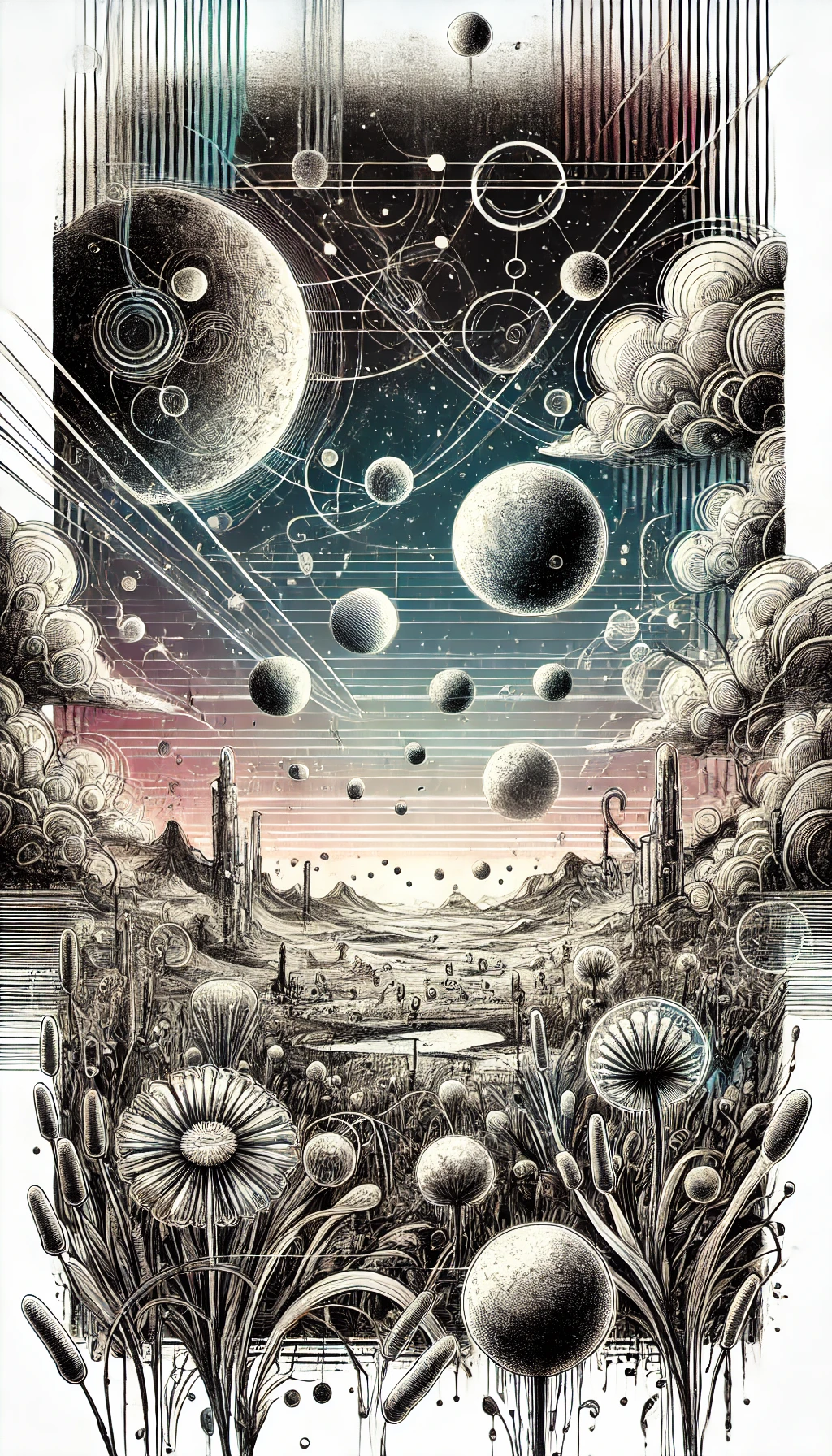
The seat of cosmic government, built from every asteroid in the belt and held together by bureaucracy nearly as dense as its rock. Hades governs through mediation rather than command, Hestia keeps the gods from killing each other during budget meetings, and Apollo's Phanerists expose everyone's dirty laundry in song. The entire Kosmos depends on the resource allocation decisions made here, which means 1.8 million Nesoians spend their days negotiating, lobbying, and pretending their patron god's agenda represents the common good.
What You See
Olympus Nesos looks like someone compressed a gravel quarry into a sphere and declared it the capital of civilization. The planetoid is rocky tundra broken by deep crevasses and granite crags, with engineered blue grass growing in stubborn patches that generate just enough oxygen to justify calling the atmosphere "breathable." It is perpetually cold, kept barely above freezing by vast steam generator networks running beneath the surface like planetary central heating.
The Grand Hall crowns the highest peak: white marble salvaged from Gaia's final days, visible from orbit, gleaming against the surrounding grey like a diplomatic overstatement made architectural. Heated corridors connect carved residential districts below, with embassy complexes and administrative buildings clustered between natural rock formations. Steam vents hiss from every district junction. The Revelation Spire, Apollo's tower of crystal and bronze, rises from the communication district. Everywhere, representatives and staffers move between sessions with the purposeful urgency of people whose livelihoods depend on cosmic committee schedules.
How It Works
Hades presides as planetary governor, a position he won by being the least objectionable candidate. His authority is fundamentally limited: gods ignore directives they dislike, pursue personal agendas regardless of collective decisions, and treat assemblies as opportunities for political maneuvering. Hades survives by appeasing everyone while satisfying no one.
Hestia's blessing prohibits open feuding and violence among gods while they conduct business on the planetoid, and her mediation chambers are where the real governance happens. Gods enter locked in eternal grudges and somehow emerge with workable agreements, though sessions sometimes take weeks of intensive negotiation. When diplomacy fails, conflicts escalate to Arbitration on Mars through a formal process: parties declare impasse, Hestia acknowledges failure, Hades authorizes escalation.
The practical work centers on resource distribution. Regular assemblies allocate Link production from Mercury, D.E.W. shipments from Saturn, food supplies from Venus, and shipping logistics through Luna. Factions lobby for infrastructure funding, territorial rights, and project backing with the intensity of operatives who genuinely believe their patron god's priorities represent cosmic justice. Apollo's Phanerist network provides fact-checking that cuts through the spin, delivering uncomfortable truths in musical form that makes every faction equally miserable.
Status follows factional influence and negotiating skill. Diplomatic liaisons, policy analysts, legislative researchers, and intelligence specialists fill the professional landscape. Career advancement depends on factional loyalty and patron-god allegiance as much as competence, with connections often mattering more than outcomes. The chthonic enforcers headquartered here patrol the Kosmos preventing unauthorized warfare and ensuring Arbitration compliance, their unique methods keeping crime rates low through what might charitably be called existential deterrence.
Why You'd Go There
Every major decision about resource allocation in the Kosmos passes through Olympus Nesos. If your settlement needs Link shipments diverted, D.E.W. quotas adjusted, or territorial claims recognized, this is where you make your case. That makes the planetoid a magnet for lobbyists, petitioners, fixers, and anyone who needs something from the gods and is willing to navigate bureaucratic machinery to get it.
The Phanerist network operates its investigative headquarters here, meaning Olympus Nesos is the best place in the Kosmos to find information someone powerful doesn't want found. Factional rivalries create steady demand for capable outsiders: couriers carrying sensitive documents, investigators digging into competing claims, bodyguards for diplomats whose negotiations have made enemies. Cross-factional tensions, jurisdictional disputes between chthonic enforcers and local authorities, and budget battles affecting entire worlds generate political friction that pulls in anyone passing through. The permanent delegations from every major culture also make it one of the most cosmopolitan settlements in the system, a useful hub for anyone seeking contacts across civilizational boundaries.
Notable Locations
The Grand Hall -- The marble assembly chamber crowning the planetoid's highest peak, built from stones salvaged during Gaia's final days. Monthly General Assemblies, weekly committee meetings, and emergency sessions all convene here. The formal dining rooms host state dinners featuring cuisine from across the Kosmos. Getting access beyond the public galleries requires factional credentials or creative social engineering.
The Revelation Spire -- Apollo's gleaming tower of crystal and bronze serves as Phanerist headquarters, part newsroom and part detective bureau. Evidence boards track divine relationship patterns, and reporters maintain bureaus on every major world from here. Politicians fear it. Everyone else treats its output as the galaxy's best soap opera.
Hestia's Mediation Chambers -- Neutral ground where even gods with millennia-old grudges somehow produce workable agreements. The chambers handle everything from border disputes to budget deadlocks, and the waiting area outside them is one of the best places in the Kosmos to overhear things you shouldn't.
The Ministry of Kosmic Development -- The bureaucratic engine processing proposals for new settlements, mining operations, research stations, and infrastructure projects. Recent disputes include competing claims for Saturn's moon Titan, arguments over Jupiter's debris field, and ongoing controversy around Neptune exploration rights.
The Chthonic Police Complex -- Headquarters for Hades' galaxy-wide Arbitration enforcement operation. Officers whose methods of arrival remain unexplained and deeply unsettling represent a persistent public relations challenge.
Complications
The transparency paradox defines Nesonian politics: Phanerist reporting has made corruption more brazen rather than eliminating it. Leaders operate on the assumption that everything will be exposed, so they practice shameless honesty about self-interest instead of concealment. Ares actively encourages factions to pursue Arbitration for disputes that could be settled through Hestia's compromise, undermining diplomatic resolutions that threaten his combat-spectacle revenue. Steam generator failures threaten the planetoid's already marginal habitability. Budget deadlocks can freeze resource distribution to entire worlds. The chthonic enforcers' jurisdiction clashes with local diplomatic protocols.
Lineage Notes
Theogens and Silenarchs dominate the Nesonian population. Theogens leverage divine connections for credibility and inside information during negotiations, while Silenarchs apply optimization expertise to policy analysis and the bureaucratic machinery that keeps governance functioning. Prometheans contribute strategic thinking and emotional intelligence that bridges factional differences. Flickers contribute cultural and historical perspective, though their difficulty with sustained single-focus work limits them to advisory rather than legislative roles. Voidkin are rare visitors; prolonged planetary living makes them uncomfortable, and most prefer returning to the frontier over extended stays. Bloomborn and Gigantes are rare: the former find the pressure overwhelming, while the latter's direct approach fits poorly with nuanced diplomatic maneuvering.