
"The void calls, and we answer. Not because we must, but because we can." — Captain Mari de Stellar Reaper
Origins
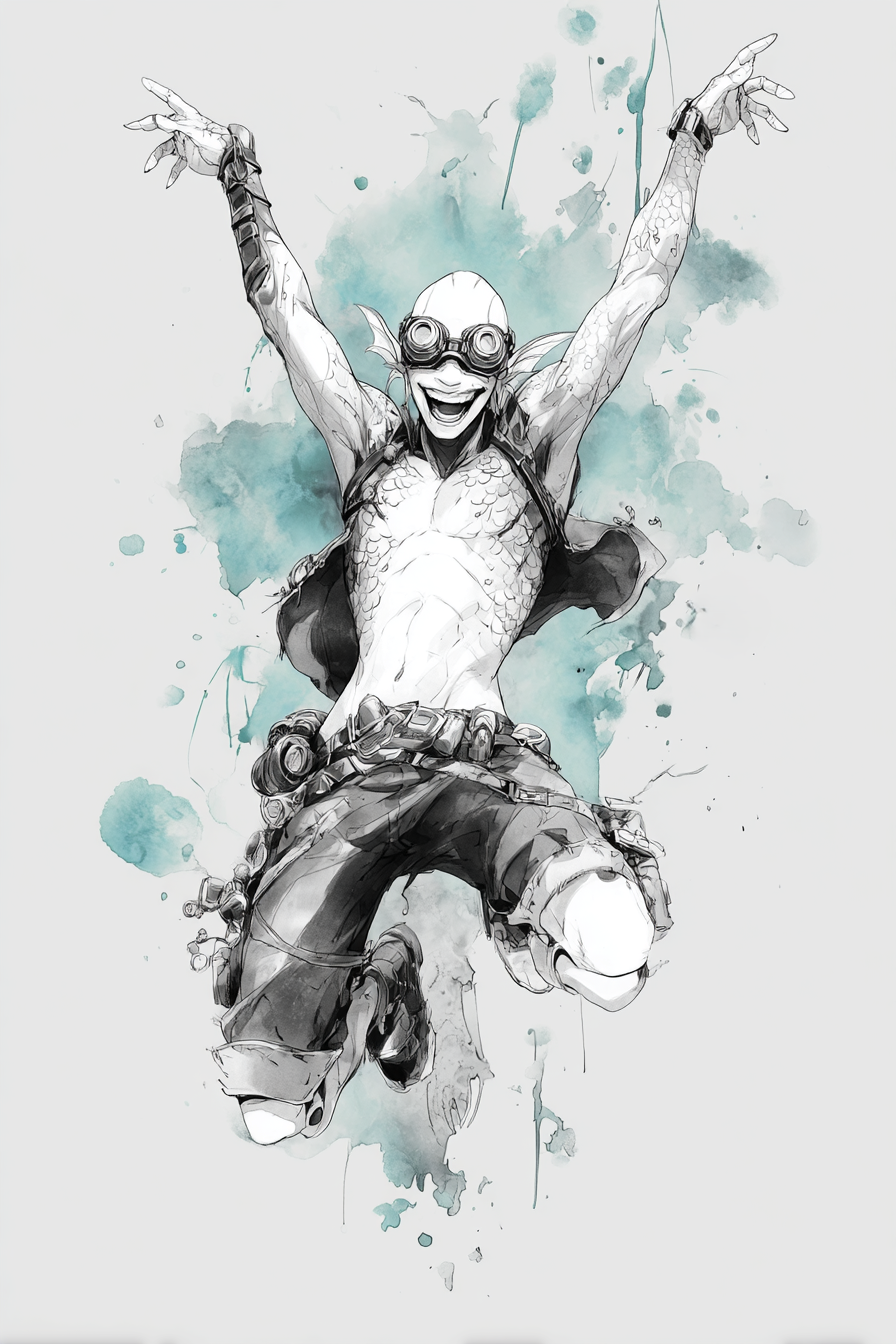
Voidkin represent humanity's adaptation to life at the Kosmos's edge, where civilization meets the infinite void. Originally isolated from main cosmic society for centuries, they evolved physically and culturally to thrive in environments that would make most people reconsider their life choices within minutes.
The fear that was bred out of them generations ago, filed away as wasted overhead, made them natural explorers of the dangerous Astral Sea, where building-sized celestial beasts drift through the void. When Soul Sailing reconnected them with broader civilization, they chose maintaining their frontier lifestyle over returning to planetary comfort, a decision that speaks either to their character or their complete inability to appreciate proper atmospheric pressure.
Poseidon treats them with respectful appreciation, viewing them as kindred spirits in the ancient art of conquering the unknown. Whether his divine presence actively shaped their evolution over millennia or merely accelerated what isolation would have produced anyway remains a matter of fierce debate among Voidkin crews. Some wear Poseidon's influence as a badge of divine favor; others insist they earned every scale through sheer survival. Poseidon himself has never clarified, which is either profound respect for their independence or the casual indifference of a god who's already moved on to the next horizon. He responds to prayers and calls for assistance but allows independence, understanding that micromanagement would kill the very spirit that makes them valuable. Artemis has developed strong affinity with their beast hunting capabilities, appreciating their dedication and willingness to face cosmic predators that most gods would rather pretend don't exist.
Form & Function
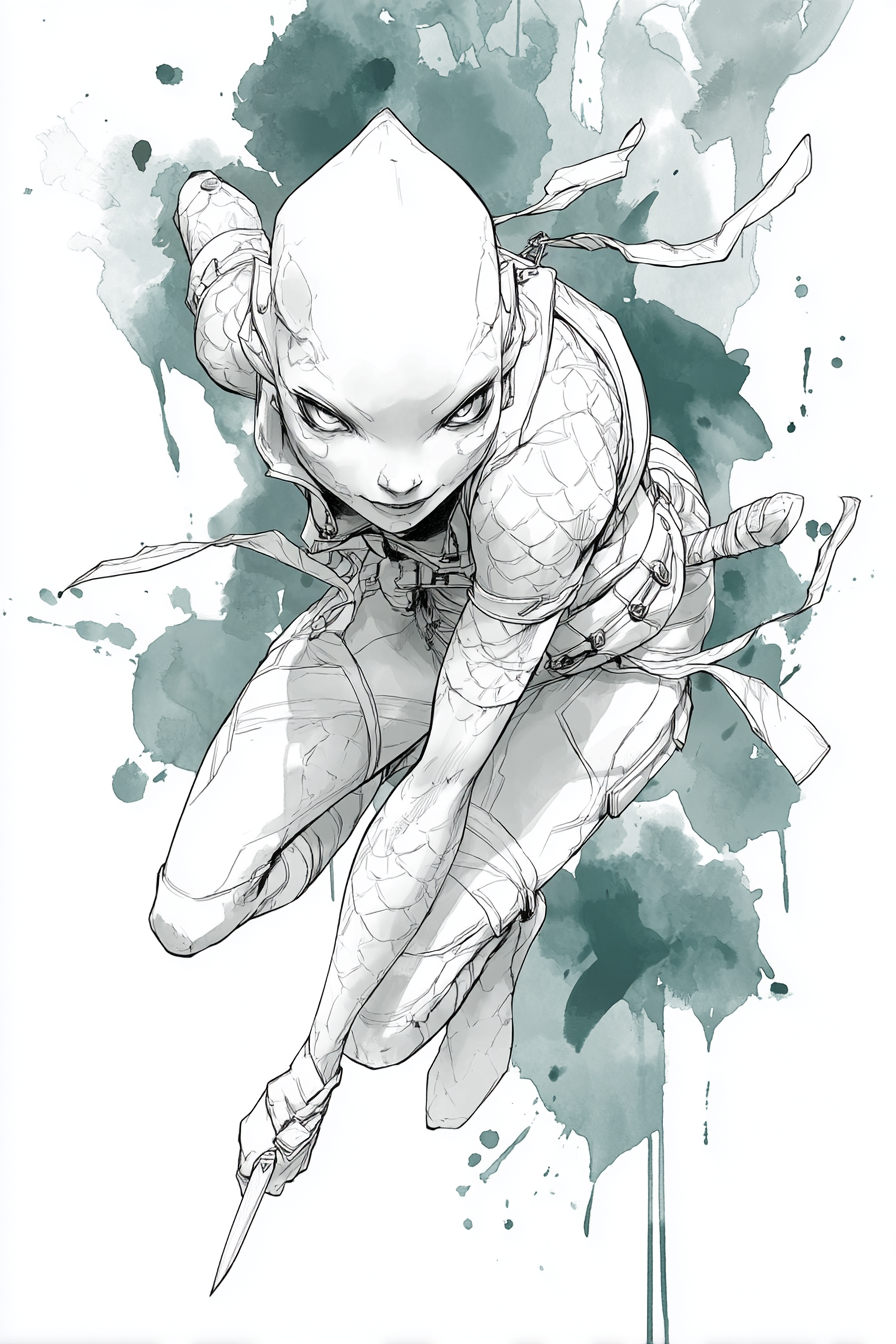
Voidkin display dramatic space-living adaptations that make their origins unmistakable: noticeably taller and thinner builds with elongated limbs suited for low-gravity environments, hairless bodies, and skin covered in fine scales that give them a distinctly piscine appearance. Males develop placoid scales with a rough, sandpaper-like texture, while females bear smoother cycloid scales with visible overlapping patterns. In both cases, these scales can tighten into a sealed membrane capable of withstanding brief vacuum exposure, buying precious minutes during hull breaches or suit punctures that would kill other lineages outright.
Their heads have streamlined over generations: flattened nasal structures replaced by smooth contours with an extremely limited sense of smell (a negligible loss for a people who live in sealed environments), and eyes that have migrated wider apart on the skull, granting a broader field of vision ideal for tracking threats from any direction. A nictitating membrane protects each eye and can seal hermetically against vacuum, functioning alongside their scale membrane during exposure events.
Their most striking feature may be their ears, which have elongated into fin-like structures resembling external gills. These serve dual purpose: detecting changes in air pressure with enough sensitivity to provide early warning of minor hull breaches, and perceiving vibrations through solid contact, allowing Voidkin to communicate across large vessels by tapping patterns on metal hulls. This vibration-sense has given rise to an entire tactile language used aboard ships, where sound doesn't always carry but metal always conducts.
These adaptations provide practical advantages that almost compensate for making port authorities nervous: enhanced cold tolerance for void exposure, superior night vision for navigating dark space, improved center of gravity for low-gravity maneuvering, and more efficient oxygen processing that reduces their respiratory requirements to impressively minimal levels.
Lifespan: Voidkin live 100 base years enhanced by immortal heritage. Additional Years = (Immortal Heritage Fraction x 200). However, their dangerous lifestyle often cuts lifespans short through accidents, beast attacks, or void exposure: occupational hazards that come with the territory of hunting cosmic monsters.
Reproduction: They reproduce with all lineages, though space-adapted genetics tend to dominate in children with the persistence of traits evolved for survival. Offspring with divine parents inherit Theogen eyes, while others display characteristic elongated builds and scale patterning with varying intensity. Some mixed-lineage children develop only partial scaling along the arms and torso, while others inherit the full adaptation including ear-fins and widened eye placement. Family structures are complicated by nomadic lifestyle that treats planets as temporary stopping points. Children are often raised communally within crews or left with relatives at settlements when parents undertake particularly dangerous expeditions. This creates complex kinship networks across frontier communities that function more like extended family than traditional nuclear structures.
Natural Abilities:
- Sealing scale and eye membranes (plus cold tolerance) that buy minutes of vacuum survival
- Fin-ears sensitive to air-pressure changes (early breach warning) and vibrations (tactile communication through hulls)
- Void-adapted physiology: wide-angle low-light vision, low-gravity agility, and minimal oxygen needs
- Bred-out fear driving calculated risk-taking
Limitations:
- Adapted to low gravity: high-gravity planets require support suits and stay uncomfortable
- Extremely limited sense of smell (negligible in space, disorienting planetside)
- Risk-seeking lifestyle that often cuts lives short
- Physical appearance creates social barriers with other lineages
Mind & Society
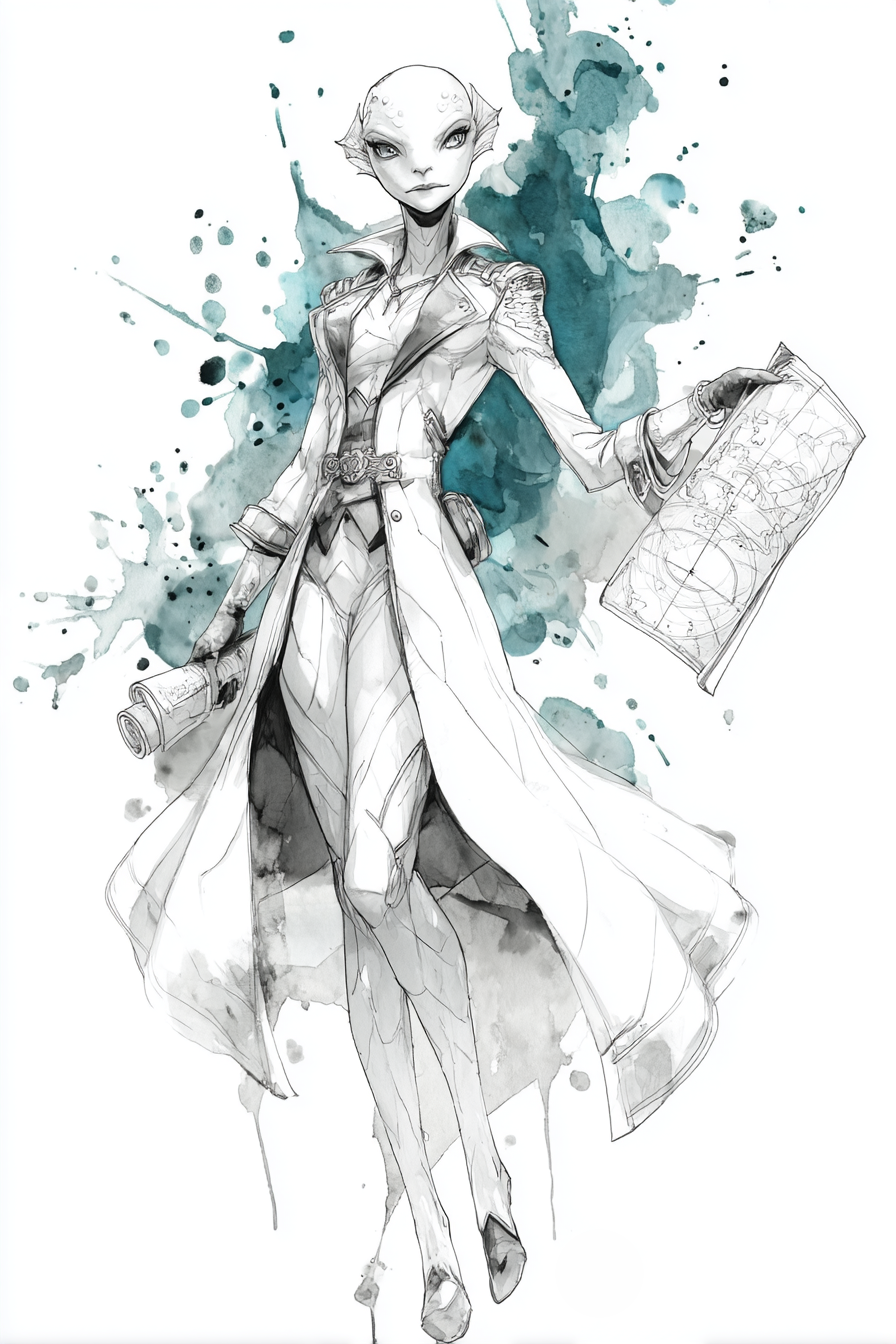
Voidkin psychology centers on a bone-deep absence of fear and what might charitably be called an addiction to audacious exploration. Their inherited risk-taking drives them to seek the most dangerous unknown regions, viewing safety as a form of suffocation rather than sensible life preservation.
Reputation functions as their primary currency: captains who break agreements face isolation from the confederation, while those honoring commitments gain access to better opportunities and more dangerous expeditions. Captain gatherings at planetoid settlements serve as trade meetings, information exchanges, and social events that maintain their loose confederation while preventing anyone from getting too comfortable with civilization. Competition exists but remains generally friendly; the Astral Sea offers enough space for multiple crews, and cooperation often proves more profitable than conflict.
Daily life revolves around ship operations, crew maintenance, and the constant search for profitable opportunities that would make insurance companies weep. Beast hunting requires coordinating complex operations involving astral projection scouting, tactical approach planning, and dangerous harvesting of creatures whose biological compositions defy conventional understanding.
Settled civilizations see them as exotic but useful. Their beast materials provide unique components for scientific research, artistic endeavors, and technological innovation that simply cannot be obtained through safer means. However, their pirate reputation and frontier mannerisms can create tensions during supply runs to more civilized locations. The few who settle permanently choose planetoid communities where they remain close to the action while enjoying relative stability. These settlements serve as crucial resupply points and social centers for those still actively hunting the void.
Naming Conventions
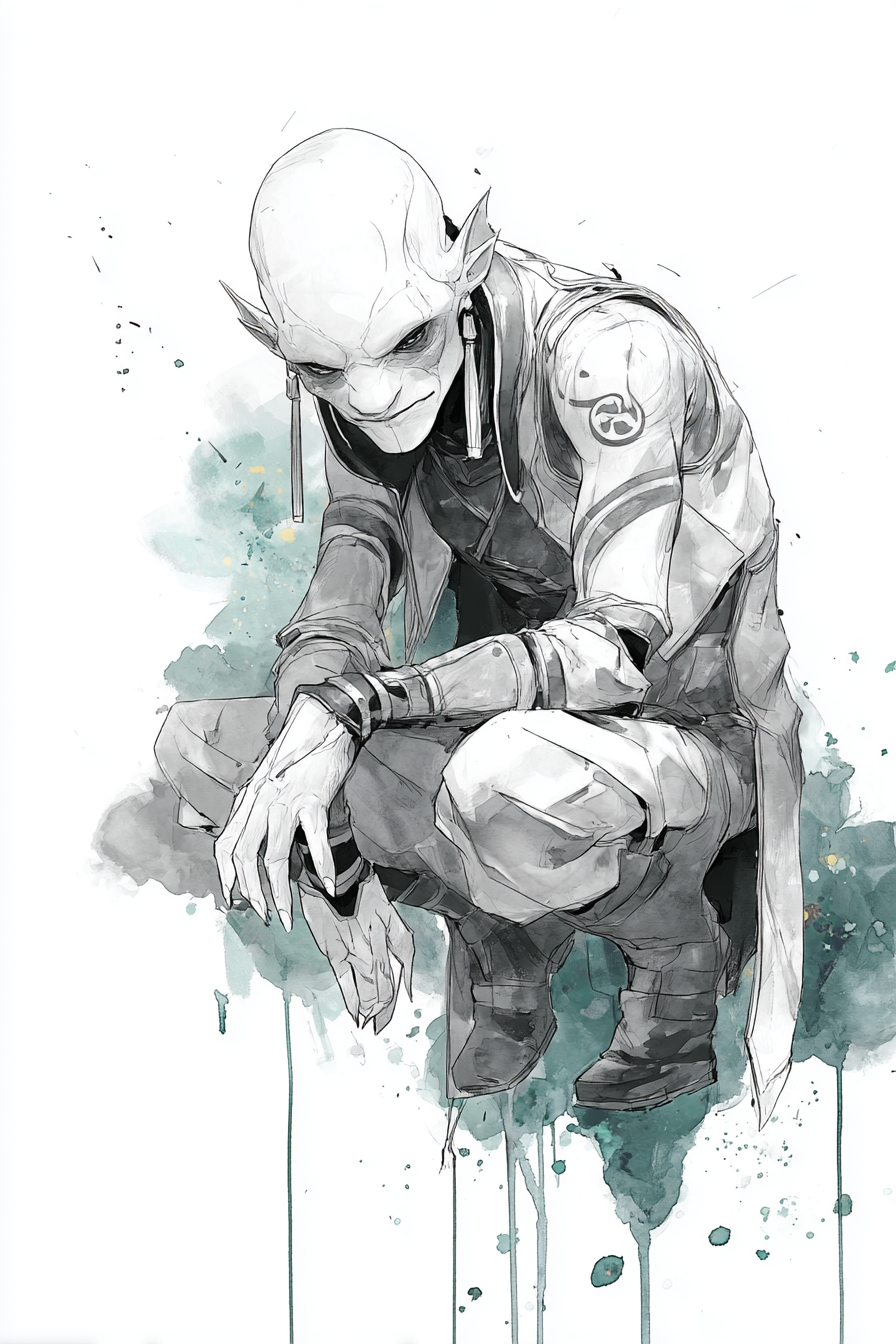
Format: First Name de Current Ship Name
Voidkin identity is inseparable from their vessel. Their naming convention reflects this: a personal first name followed by "de" (meaning "of") and the name of whatever ship they currently crew. When Captain Mari serves aboard the Stellar Reaper, she is Mari de Stellar Reaper. If she transfers to the Driftcleaver, she becomes Mari de Driftcleaver, same person, new name, no ceremony required.
This means Voidkin have no permanent surnames. Their "family name" is their ship, and it changes whenever they do. Children raised communally at settlements carry the name of whichever vessel their parent or guardian currently operates. A Voidkin between ships, whether grounded, waiting for a berth, or recovering at the Mend, is simply their first name. Just "Mari." Among Voidkin, being introduced by first name alone is understood as either temporary hardship or deep personal shame, and polite company doesn't ask which.
First names run two syllables with emphasis on the second, typically ending in a long vowel sound: Ma-RI, Su-RA, Ka-EL, Jo-SSA, De-XEI, Ve-LI. This isn't aesthetic preference. It's acoustic engineering. A stressed second syllable with a ringing vowel carries across hull breaches, engine roar, and the ambient chaos of ship life where being heard on the first shout can be the difference between a close call and a funeral. The names are built to cut through noise, and they do.
Examples: Renai de Blackcoil, Tova de Shrike's Maw, Lehki de Frostcarver, Bazhi de Whetstone