
"Divine blood is not a crown. It's a weight that shapes how you walk." — Andros the Contemplative, Theogen philosopher
Origins
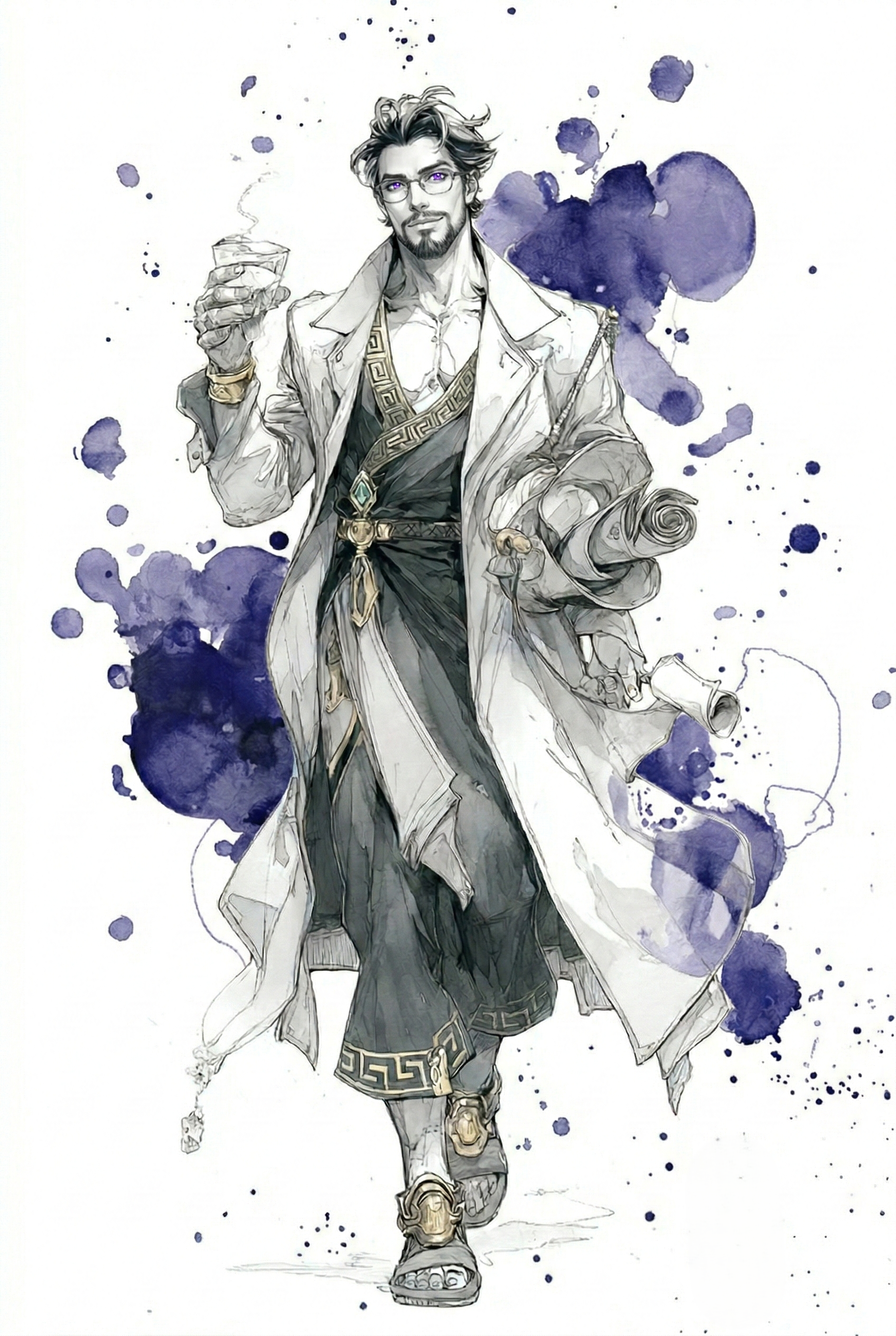
Theogens are direct children of gods and mortals, born from unions serving diverse divine purposes in the modern Kosmos. Unlike ancient tales of gods pursuing mortals purely for passion, contemporary relationships reflect deeper cosmic involvement ranging from genuine love affairs to calculated political maneuvering.
Gods might choose mortal partners as blessings for exceptional loyalty, strategic political alliances, authentic romantic connections, or calculated moves to strengthen settlements with enhanced genetics. The motivation behind their divine parent's choice profoundly shapes each Theogen's identity. Some grow up knowing they were born from love, others discover they were political tools, and still others learn they represent divine gratitude or strategic necessity.
Divine communication operates primarily through astral plane interaction, functioning like a psychic telephone service with all the associated complications. Gods contact their children through visions or intuitive feelings, an open line a Theogen can reach for at need, though whether the parent on the far end cares to answer is its own gamble. The line runs decidedly two-way. Gods often use them as pawns in their schemes, and contact can be initiated unwillingly from either direction. The relationship proves both blessing and burden: useful for advancement and emergency assistance, but eternally complicating questions about personal achievement and authentic merit.
Form & Function

Theogens possess the most distinctive trait among human-appearing lineages: vibrant, deeply colored eyes in any conceivable hue that would make jewelers weep with envy. Brilliant emerald, deep violet, molten gold, crystalline blue; their gaze often reflects subtle aspects of their divine parent's domain while serving as unmistakable heritage markers.
Beyond their distinctive gaze, they maintain effortless physical perfection bordering on the supernatural: flawless hair upon waking, skin without blemishes, ideal body composition achieved with minimal effort, and uncanny attractiveness adhering to conventional beauty standards across cultures. Their health proves impeccable: rarely ill, quick healing, graceful aging until eventual mortality. This perfection, while enviable, often makes other lineages uncomfortable in ways that create subtle social barriers even when the Theogen harbors no intentional vanity.
Lifespan: Theogens typically live 200-300 or longer if their mortal parent also had divine heritage: Additional Years = (Immortal Heritage Fraction x 200). Extended lifespan creates their most defining challenge: midlife metamorphosis occurring around age 100-150. As mortal friends, family, and lovers begin aging or dying while they remain in prime condition, Theogens undergo profound psychological transformation. This "enhanced midlife crisis" often results in complete personality shifts, radical value system changes, dramatic location relocations, or career pivots so extreme they essentially become different people.
Reproduction: They reproduce with all lineages, with children of divine heritage always inheriting distinctive Theogen eyes regardless of other parent's lineage. Mixed heritage children typically identify culturally with whichever parent raised them. Relationships often struggle with the longevity of Theogen lives, leading to frequent heartbreak and tendency toward shorter relationships or single parenthood as they outlive partners with depressing regularity.
Natural Abilities:
- Direct communication with divine parent through astral projection or prayer
- Enhanced physical health, healing, and appearance
- Extended lifespan and graceful aging patterns
- Divine favor: advancement and emergency assistance from their divine parent
Limitations:
- Constant scrutiny regarding achievement authenticity
- Susceptible to being used as pawns in divine politics
- Enhanced midlife crisis that fundamentally alters personality
- Social barriers created by physical perfection
Mind & Society

Theogen psychology centers on the complex burden of inherited privilege and constant struggle with cosmic nepotism. Every achievement raises questions about whether success stems from personal merit or divine advantage, a form of imposter syndrome that would require its own psychological classification. This manifests differently across individuals: some become driven overachievers desperately proving their worth, others embrace advantages with varying degrees of guilt or entitlement, and most navigate the moral ambiguity of inherited advantages somewhere between these extremes. Perhaps most significantly, they develop profound anxiety about impermanence. Extended lifespans create pressure to accomplish something worthy of extra time, while inevitable mortality haunts consciousness more acutely than it does for truly immortal beings.
Half-siblings with shared divine parents sometimes form networks, though success depends heavily on their god's reaction to sibling cooperation. Competition among divine siblings can be intense, particularly for shared parent attention, creating internal politics that mirror divine court intrigue.
Career choices often reflect their struggle with privilege: some leverage divine connections strategically, others choose fields where heritage provides no advantage, and many find themselves overcompensating by taking on challenges that would make sensible people question their judgment.
Other lineages view them with complex mixtures of envy, respect, suspicion, and discomfort that shift depending on circumstances. Their physical perfection and divine connections inspire both admiration and resentment, while their authenticity struggles often generate sympathy from those who recognize the psychological burden of inherited advantages.
Naming Conventions

Format: Greek First Name the Epithet
Theogens carry Greek first names reflecting their divine heritage and a defining epithet in place of a surname. The epithet is traditionally bestowed by their divine parent at birth, a name-blessing that functions as equal parts gift, expectation, and brand. Ares might name his daughter Callista the Unyielding. Demeter might declare her son Lykon the Patient. The epithet often reflects what the god values or hopes to cultivate, which doesn't always align with what the child actually becomes.
This creates a lifelong tension. Aphrodite might name a child "the Devoted", a word that sounds like warmth but reads like a leash, an expectation of loyalty the child never agreed to. A Theogen saddled with an epithet that serves their parent's agenda rather than their own identity carries that weight in every introduction. Many carry their birth-epithet with pride. Others chafe under names that feel like instructions. The midlife metamorphosis, that profound psychological shift around age 100-150 as mortal loved ones age and die, frequently triggers a formal epithet change. Andros the Promising becomes Andros the Contemplative. Selene the Joyful becomes Selene the Unbound. The old epithet is never forgotten, and those who knew the Theogen before the change sometimes refuse to use the new one, creating quiet interpersonal friction that can last decades.
Theogens have no family surnames. The epithet is the identifier, and sharing a divine parent doesn't create a shared name. Two children of Aphrodite might be Naia the Radiant and Theron the Restless, half-siblings with nothing in common but their eyes.
Examples: Ianthe the Sorrowed, Zosimos the Twice-Fallen, Phaedra the Unshaken, Evander the Quiet, Doreia the Merciful